
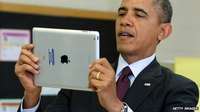
The US is running a nationwide initiative to improve computers and communications in schools
Schools in Los Angeles are seeking compensation from Apple over a $1.3bn (£870m) iPad-based education project that has gone awry.
They have sent letters to Apple and its project partners seeking refunds.
The project began in 2013 and aimed to give iPads and other computers to about 650,000 students.
It hit problems when students were able to bypass security systems on the tablets and because the computer-based curriculum was incomplete.
Cutting ties
In the letters, the LA Unified School District (LAUSD) said it was “extremely dissatisfied” with the way the project has been handled, according to a report in the LA Times.
The scheme was intended to be a way for poorer pupils to keep up with wealthier peers who already enjoyed access to tablets and other computer-based study aids.
The LA school district initially bought 43,261 iPads loaded with a maths and English curriculum designed by educational and training firm Pearson. A further 77,000 iPads were bought to be used in standardised tests.
Teachers, school heads and administrators were also expected to use the gadgets to improve lessons and the way schools were run.
“While Apple and Pearson promised a state-of-the-art technological solution they have yet to deliver it,” said the letters sent to the two firms this week.
Lawyers acting for the school district are also believed to be considering legal action against the two main suppliers. In addition, the schools have cut ties with the firms and do not want them to be involved in any future development.
The letters come after repeated demands from the LA school district that Apple and Pearson improve the way the scheme was being run. In its complaints, the district said only two schools were regular users of the iPad-based curriculum and those that used it intermittently reported frequent problems.
Apple has not responded to requests for comment about the complaints.
In a statement, Pearson said it was “proud of our long history working with LAUSD and our significant investment in this groundbreaking initiative to transform instructional practices and raise expectations for all students”.
The statement acknowledged the “challenges” there had been in implementing the project but said it stood by the “quality of our performance”.
The Pearson/Apple deal was one part of a $1.3bn programme that included spending $700m on improving internet access at schools.
The superintendent in charge of the LA school district who drew up and oversaw the costly programme resigned after the problems with the scheme came to light.
via US schools seek refund over $1.3bn iPad project – BBC News.
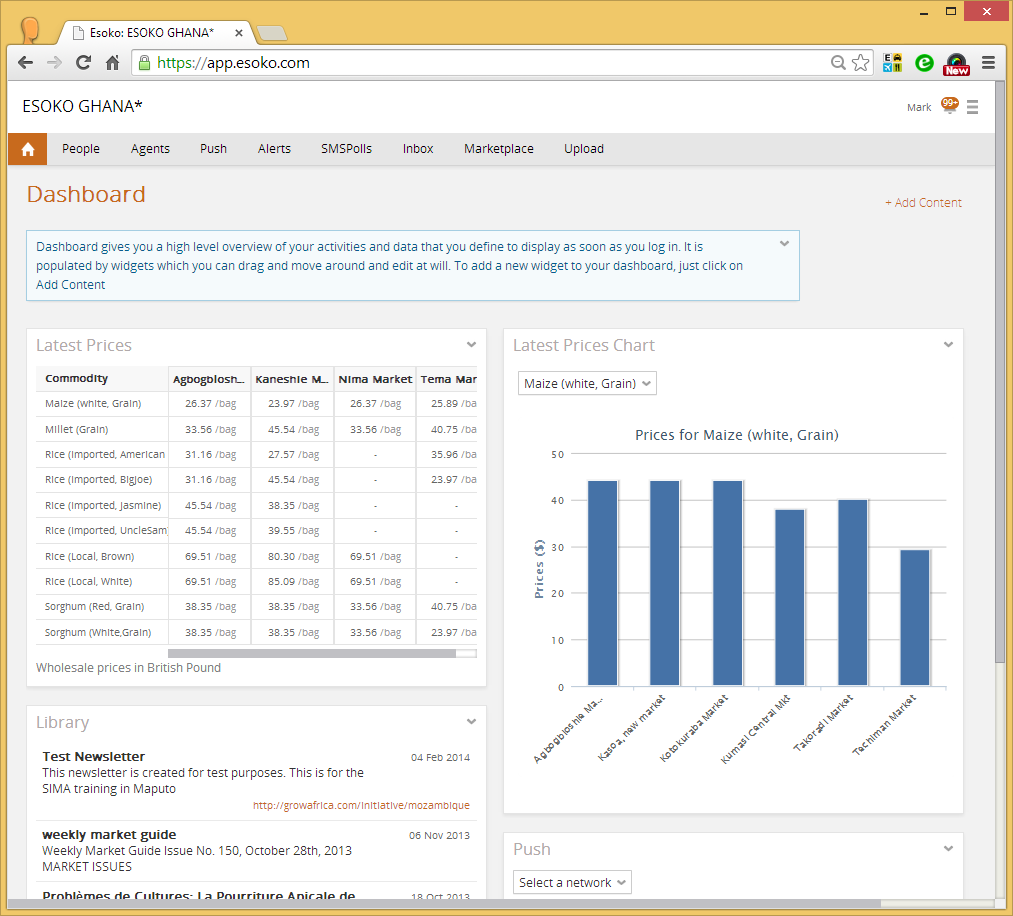
 The service relies on the combined SMS/ USSD and a call centre channels, using an operational model familiar to me from the of Esoko in Ghana. The 24-hour service provides market price information from different markets in the regions of Sikasso and Koulikoro; and information on crops such as corn, shea butter, onion, cashew, shea nuts, potato, sweet potato, rice and millet. Message services are delivered via a USSD menu on Orange Mali’s mobile network. The call centre staffed by agricultural advisers is reachable by the short number 37333 and the short code #222. The content for the service is generated via wide data collection efforts on food prices; as well as, national and international market trends.

 MMD4D
MMD4D 