
May 18, 2009
Espoo, Finland – Nokia brings the Internet in emerging markets closer to reality with the announcement of three new mobile phones that open the door to information, entertainment, family and friends. The Nokia 2730 classic, Nokia 2720 fold and Nokia 7020 each come Internet-ready, and work with Nokia’s range of emerging market services such as Nokia Life Tools and Ovi Mail, creating solutions that help people get ahead.
“The power of the internet is undeniable,” says Alex Lambeek, Vice President at Nokia. “We’ve seen mobile technologies catalyze the growth of the informal sector across the world, empowering local entrepreneurs and having an immediate and lasting impact on people’s lives. Services like Nokia Life Tools and Ovi Mail, combined with the mobile phones we’re launching today, bring powerful solutions that can be the gateway to knowledge, entertainment and people, without the need for a PC.”
According to extensive Nokia consumer research, nearly half of emerging market customers state that they would rather connect to the Internet over a mobile phone than a PC. As a result, Nokia has developed locally relevant solutions that consist of affordable mobile phones and applications, designed and built from the ground up to meet the specific needs of customers in the developing world. Lambeek continues, “Whilst many people are still primarily using voice and text, the Internet does offer a whole new range of opportunities.”
Nokia Life Tools is a service that enables people to make better informed decisions, find timely and relevant information, access learning opportunities and enjoy entertainment regardless of time or place. In a pilot study in India, results showed that the services had high appeal for livelihood and life improvement services. Another service aimed at the developing world is Ovi Mail, which has the potential to be the first digital identity for many people in emerging markets. Unlike most other email services, an Ovi Mail account can be created and used directly on a Nokia device without ever having to use a PC. Since the launch of the beta service in December 2008, around 90 per cent of the accounts have been created on a Nokia phone.Nokia 2730 classic
Competetively priced and equipped at EUR 80, the Nokia 2730 classic is Nokia’s most affordable 3G phone offering faster access to the internet and a richer browsing experience. With the steady spread of 3G data networks across the developing world, the Nokia 2730 classic is ideal for staying connected with friends and family, and sharing one’s life with others. The Nokia 2730 classic is expected to start shipping in the third quarter of 2009.

Nokia 2720 fold
The Nokia 2720 fold is a compact fold phone with an exciting mirror-effect design, which helps people stay organized with easy access to email, calendar, Internet connectivity and file sharing applications. Email can be activated by completing a simple three step set-up process, and in select markets will be offered with Nokia Life Tools. The Nokia 2720 fold is expected to begin shipping in the third quarter of 2009 for an estimated retail price of EUR 55 before subsidies and taxes.
Nokia 7020
A fashionable fold phone that uses light, color and metal finishes to convey personal style, you will never miss a thing with the stardust effect when you get a call or message, or tap twice to have the cover light up. Connect to social networks, and share pictures taken with the 2 mega pixel camera and shown on the bright display. The Nokia 7020 is expected to beging shipping in the fourth quarter of 2009 for an estimated retail price of EUR 90 before subsidies and taxes.Lambeek concludes, “With our longstanding commitment to emerging markets, a Nokia customer can be confident that any product we offer meets a strict and consistent set of high-quality standards. This is particularly important in markets where technical assistance and repair shops are not easily accessible.”via Nokia – ShowPressRelease.

Warehouse Receipt Systems
Here is a very informative educational documentary on Warehouse Receipt Systems produced by the Technical Centre for Agricultural and Rural Cooperation ACO-EU (CTA), Agence Français de Développementé (AFD) and the Natural Resources Institute (NRI).
The film documents a study visit to Tanzania and South Africa. Even though the film provides plenty of useful information, its authors make sure to note:
“The examples presented in these two countries are typified by particular experiments and contexts and cannot simply be transposed to other cases. Nonetheless there are a great number of lessons to be learnt and which could provide guidancefor certain aspects of orientation and initiatives in your respective countries.”
I personally think that the documentary illustrates theoretical issues which are encountered the world over, and are not specific to any particular context. The film raises questions regarding trust, confidence, contractual completeness, regulation, product quality and standardisation. Even though in this documentary the issues emerge with regards to warehouse receipt systems, they are intrinsic characteristics of any market negotiations (and eventual transactions) taking place without the double coincidence of time and place. The film focuses on futures markets i.e. transactions without coinsidence in time. Conversely, market negotiations carried out via mobile phones, or other ICTs exemplify transactions without coinsidene in place.
Warehouse receipt systems were developed in the 1990s as a response to farmers’ income instability due to price fluctuations resulting from liberalisation. Since prices tend to be low during harvest periods and to subsequently rise, warehouse reeipt systems provide a solution by storing commodities for the suration of the low price season. Price volatility and lack of quality standards are attributed to market liberalisation in the agricultural sector.
Warehouse receipt systems operationalise the food supply chain and involve the following stakehoders:
- farmers (individuals or cooperatives)
- warehouse operators
- financial institutions
- exporters, traders
Tanzania
The warehouse receipt system was introduced in Tanzania in 2005 with the pilot crops of coffee and cotton. It enables farmers to receive loans and assure the quality of their produce. The system allows coffee producers (individuals or cooperatives) to store their coffee in a silo. Upon the receipt of the coffee the producers are issued with 2 certificates: certificate of title for them to keep and certificate of pledge to provide to third parties. These are normally cooperative or commercial banks participating in the system. The certificates of deposit allow farmers to induce confidence in the financial institutions. They also enable the banks to reach a new set of customers for financial services.
The warehouses also ensure the transparency of the commodity marketing system. Commodities are classified according to quality and offered for sale at regional and sub-regional markets. For example, coffee is graded and offered for sale at auctions administered by a public organisation.
Producers in other sectors, such as the Chawampu rice growers cooperative, have followed suit. Representatives of the cooperative introduce a model whereby they are able to offer 70% of market value of deposited quantities of rice. Subsequently, after selling the crop and substracting the administrative costs the cooperative, they provide a second payment to the members of the cooperative. Farmers use any additional income in order to buy seeds, fertilizer and to develop off-season activities.
The warehouse receipt systems functions well due to the high price differentials between the post-harvest season and the hungry season. The main challenges to the warehouse receipt system remain:
- providing adequate infrastructure
- ensuring warehouse security
- reinforcing producers’ organisations
- increasing the number of quality control specialists
- reducing operating costs
South Africa
South Africa presents an advanced example based on the warehouse weceipt system because it has a functioning futures market in agricultural commodities. The SAFEX was established in the 1990s during an intense period of market liberalisation.
The advantages of South Africa include its good financial infrastructure for the settlement of deals and the quality of its physical infrastructure enabling the trading, warehousing and transportation of the commodities. Critical is the legal enforcability of contractual rights and of legal receipt rights. Thereby, people are able to take the necessary steps and to manage their post-harvest risk well in advance.
SAGIS acts as an information intermediary for the South African commodity markets. It collects and distributes local consumption and up-to-date market information. The agricultural marketing giant SENWES provides mobile phone access to hourly prices of grain via SMS. Even though it is not typical of Africa in favouring large scale farmers, the South African warehouse receipt experience provides a useful benchmark for implementations elsewhere.
Market Data Collection and Location Information via Mobile
From my own observations, namely the list of ICT4D projects, I think it is a fair comment that most of the initiatives are aimed at information delivery, rather than information collection. Many market information systems profess delivering benefits and improving livelihoods by providing access to up-to-date price information. But rarely publicity documents mention how exactly the information is collected, how its accuracy is assured, or how it is put to use. Occassionally, market information systems are backed-up by extensive and robust networks of ennumerators who are experienced in data collection. The cases of TradeNet/ Esoko in Ghana and Trade at Hand’s mCollect project, come to mind. In such cases I can be convinced of the value of the delivered market information content. In other cases I tend to be a bit more sceptical.
Here I have two videos touching on the topic of data collection. In the first video, Mr. Patrick Meier from Harvard Humanitarian Initiative (HHI), who writes iRevolution discusses crisis mapping and early warning systems. His work brings together data collection and geo-spatial information. His ideas can be staightforwardly applied to the mapping of stocks and frows of food products. Mr. Meier overviews lessons learned, best practices and current thinking in the emerging field of crisis mapping.
Mr. Meier stresses four main areas of crisis mapping. The first one is crisis map sourcing. The technologies he overviews can easily be applied to market data collection, or in his terms price map sourcing, which would involve the collection of geo-refernced and time-stamped price information. The crowd sourcing methods mentioned in Mr. Meier’s presentation include surveys, focus groups, satellite imagery, participatory GIS, annotated digital maps such as the ones which can be produced via Ushahidi, as well as mobile technologies such as text messaging via FrontlineSMS. Mr. Meier also discusses the accuracy of the crowd-sourced data, he mentions the design principles of data validation and triangulation. Two interesting initiatives which could be adopted in the field of market information monitoring are the Humanitarian Sensor Web, identifying relevant infrastructure; and the Mesh4X automated synchronisation of disperate datasets which makes information sharing seamless.
The second are of interest is crisis data visualisation, including social mapping (i.e. distances on the map represent social perceptions), 3D GIS, pdf-mapping and dynamic maps. The third area is crisis mapping analysis where maps are used as indications of large-scale behavioural patterns over time and space. The fourth area of interest is crowd-feeding, in my understanding the reverse of crowd-sourcing or in other words information delivery services. Mr. Meier mentions response crowd-feeding whereby information is sourced from some in order to be delivered to others who need it the more.
Vodpod videos no longer available.
In the second video Mr. Ian Puttergill, Business Development Manager, Unlimited Potential Group, Microsoft, Soth Africa shares his views on how data can be collected using mobile phones. Firstly, he emphasises the accuracy of the information sources and argues that mobile phone communication is applicable when the accuracy threshold is lower. Mr. Puttergill stresses that a filter is needed for data collection implementations so that irrelevant information can be discarded. He also mentions a loop re-entering information when the format is not correct. Additionally, Mr. Puttergill discusses business models for mobile information services, focusing on socially relevant information as key for finding suitable commercial models, non-profit models, or advertising models.
The videos, the thoughts of Mr. Puttergill and the information provided by Mr. Meier give a lot of food for thought regarding the design of market information services which include rigorous information sourcing methods, allow for mapping of the agricultural product stocks, and are based on sustainable business models. Please get in touch with me if you are interested in discussing the topic further, or comment below.
More on the Integration of Radio and Mobile Telephony
In the post “Integrating Radio and Mobile Telephony” I commended on Nokia’s recently released device 5030 mobile. Here I am reproducing an atricle and video on the topic, produced by Mr. Jonathan Marks and broadcast via Jonathan Marks’ videos on Vimeo.
Nokia on the Importance of Radio
Mark Selby has been giving a talk at several conferences about the importance of radio to the mobile industry. Given his background (including World Radio Geneva) it is perhaps not surprising that he’s interested in forging partnerships between Nokia and broadcasters. By the end of 2008, Nokia says they had sold 425 million devices with digital music players. In addition to that, thay say they have sold 700 million devices with built in (FM) radio capability. Phones like the N85 even have a built in FM transmitter so you can play the music in the car on the existing car radio (its super low power, but handy to have).Part of my current projects involve working with community stations in West Africa to build sustainable business models that bridge both the radio and mobile industries. They have a lot in common, but currently the gulf in terminology is keeping great ideas from happening.
Vodpod videos no longer available.
Weather Insurance by SMS
Eric Seuret from 3smobile.com introduces a pilot initiative in Kenya providing farmers with weather insurance through the immediacy of SMS.
Vodpod videos no longer available.
more about "Weather Insurance by SMS", posted with vodpod
Service Syndication and Nokia Life Tools
This video was filmed at the Digital World Forum, W3C workshop in Maputo, Mozambique 1-2 April, 2009. Mr. Paavo Krepp, Head of Emerging Market Services, Africa and Middle East of Nokia, South Africa stresses the importance of content for the creation of adequate mobile information services in developing countries. Given the low disposable incomes of users of agricultural information services, Mr. Krepp emphasises the importance of enhancing the relevance of the delivered content by providing dynamic time and location specific information. He also discusses the customisation of mobile services to local perceptions, languages, understandings of iconography, and dynamic mappings of crops.
In the mobile sector, collaboration among content providers with local and domain knowlegde, telecom operators and device manufacturers appears to be key for the successful provision of information services for the agricultural sector, including advisory and marketing services. The recent partnership between Nokia and Reuters Market Light for the Nokia Life Tools pilot in India is a great example of syndication in the delivery of mobile services for users in developing countries. I expect that we should be seeing more partnerships of this type if mobile technology is to deliver on its promise of improving the livelihoods of smallholder farmers in developing countries. Nowadays, these people are facing numerous challenges ranging from erratic weather, due to climate change, to food security. Working collaboratively towards the provision of adequate technology-based information services for their needs seems the very least we could do.
Evaluating the Use of Mobile Phones for Access to Price Information in Ghana
Here is an interview with Mohammed Mounouni of SAND, Ghana recoreded on 19 March 2009. He reflects on the monitoring and impact evaluation of the use of mobile market information services such as the services TradeNet and Esoko implemented via the MISTOWA project. Mr. Mounouni hopes new developments in the Esoko platform will make farmer’s feedback easier and suggests they should not pay credit time when they do so. Mr. Mounouni emphasises the importance of fieldwork with African farmers, investigating their use of market information.
Vodpod videos no longer available.
Having researched invormation behaviour, I agree particularly strongly with this point. With the current surge in the development of mobile Intenet services I think it is essential that forthcoming ICT4D projects are needs-based and take into account information use. Otherwise, the development community is in danger of proliferating technology for its own sake.
In another interview available through the Forum for Agricultural Research in Africa (FARA) blog the software developer David McCann of Busylab, Ghana introduces the new Esoko platform which builds on the efforts dedicated to the implementation of the TradeNet Web based platform. The Esoko technology includes an SMS gateway with a centralised computing power in combination with an extendable mobile application.
Vodpod videos no longer available.
Tajik Agro-Processing Company Wins Online2Export Website Competition
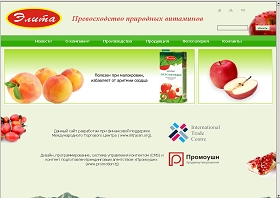
Few Tajik enterprises have a website, especially in the agro-processing sector: lack of resources is the most commonly named explanation, followed by low awareness of the benefits of a professional web presence. As ITC is promoting the development of e-business in the Tajik agro-business sector, it was decided to support the development of three websites for companies, to serve as role models and showcase best practice.
This activity was undertaken in partnership with the Chamber of Commerce and Industry of the Republic of Tajikistan (TPP). Three web-design agencies were contracted to implement this activity: ANKO Web Design, Caftar and Promotion. Tajikistan has a small base of companies in this area, but it has been growing in the last 12 months.
The three websites were developed at the beginning of 2009. The creative process required a close partnership between the beneficiary SMEs and the agencies, which needed feedback on design and architecture, as well as text and pictures on the content side. The sites were developed in Russian only, as the CIS is the main destination market for Tajik agro-processed goods. Search engine optimization was to be undertaken accordingly on rambler.ru, yandex.ru and google.ru, the leading engines in this region. To allow for easy updates, the sites were built on the basis of a CMS, a web content management system. As a result, updates do not require the involvement of IT experts.
Once finalized, the websites were submitted to ITC’s Online2Export group of international experts. They assessed the sites and voted for the best one through an online survey tool. Elita was designated as the best website, based on its usability, content and search engine optimization. Pulod Amirbekov, General Manager of Promotion, welcomed the designation and hoped that the competition result would get other Tajik companies to opt for a website – using local expertise.
Cultural Exchange and Export of Digital Content
The increased availability of ICTs in Africa provides opportuities for their adoption in the process of art creation and in the marketing of unique handcrafted products to large audiences. The increased opportunities for cultural exchange and for export of digital content raise questions regarding the licensing of art products and their copyright.
At the Africa Gathering which took place in London on April, 25th 2009, Martin Konzett from ICT4D.at (Austria) presented the trailer for the upcoming film release “Hello Africa”. The movie is a documentary which sets out to illustrate the ongoing phenomenon of constantly increasing mobile phone use in Africa in general, and Zanzibar in particular. The film documents how the mobile boom is changing traditional attitudes, cultural values and social patterns.
The documentary captures contemporary, everyday life in Africa. It presents the lifestyles of African people, the concepts used in their popular culture, their habits, opinions and activities in the context of mobile technology use. “Hello Africa” portraits individuals from various social groups: students, rappers, teachers, athletes, vendors, watchmen and many more. The forthcoming release date for the documentary is May, 8th 2009. The interest in “Hello Africa” even prior to its release is an example of the opportunities offered by ICTs for cultural exchange between Africa and the rest of the world. The film will be licensed under a Creative Commons license BY-SA. This means that all of the raw material as well as the final edit of the film will be available for anyone to copy, share, remix and sample under the license condition.
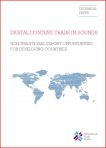 The increased opportunities for cultural exchange and for export of digital content prompted the International Trade Centre (ITC) to published in February 2009 the technical report “Trade in Sounds”. The report considers the potential of digital content, particularly music, to generate export revenues for developing countries and to encourage the online distribution of music from developing countries. The report uses the OECD definition of digital content as the “digital delivery of content, specifically, scientific publishing, music, on-line computer games, mobile content, user-created content and public sector information and content”.
“Trade in Sounds” presents ITC’s findings on the topic of international trade in digital music. The subject matter is introduced by a chapter on market trends and challenges. The report continues by overviewing methods and techniques which can be used successfully for the distribution of digital content via the electronic channel. Because of its commercial character and its impact on music trade, traditional copyright, rather than Creative Commons licensing, is enphasised in the report. “Trade in Sounds” includes detailed case studies of the existing opportunities for export of digital music content by the music industries in Brazil, India, Kyrgyzstan, Mali, Senegal, Serbia and Tajikistan.
 Another recent initiative aimed at an increase in the exchange of visual art
 products between Wes
 t Africa and the rest of the world is the project Kachile led by Ulf Richter in the Ivory Coast. Kachile seeks to create digital opportunities for artists in West Africa by enabling them to sell products in the following categories: accessoires, african art, ceramics, fashion, furniture, jewlery, music, textiles, toys, etc. The categories in the Kachile marketplace are still in the process of being populated. Nonetheless, the project carries the promise of creating an electronic marketplace for African products of visual art and music.
Mapping Our Future
Here is a video I came across detailing the recent meeting of the CGIAR consortium for spatial information, under the heading “Mapping our future”, carried out on March 31- April 4 2009 in ILRI Nairobi, Kenya.
Video features interviews with Mr. Srikant Vasan from the Gates Foundation, Mr. Todd Slind from CH2M, Mr. Andrew Jarvis from Biodiversity, CIAT, and Mr. Stanley Wood from IFPRI. The main topic discussed is location intelligence and its use for raising incomes and reducing the poverty for smallholder farmers. Mentioned are novel means of delivering geo-spatial information to farmers and constituents in developing countries, including the mobile technology channel, web applications and low tech delivery methods. Interviewees emphasize the current drive to deliver location-based information to farmers, extension workers, agricultural input and output traders, micro-finance institutions. Mr. Stanley Wood mentions presentation by Google Kenya who have created tools to search and navigate through web-based information. He stresses the need for the parallel alignment of the efforts and resources of private technology developers such as Google and research institutions such as IFPRI.
Vodpod videos no longer available.
Mr.Andrew Jarvis summarises the current trend in geo-spatial technology to provide practical solutions to problems identified by social scientists and decision-makers. He mentions that the revolution in the use of mobile technology in Africa happened within 3-4 years, allowing the development of services such as Tradenet in West Africa and envsions a revolution in the use of geo-spatial technology. I personally am certain that location-based information delivered via mobile technology can greatly impact the efficiency of the food supply chain in African countries, thereby benefitting farmers, and facilitating the work of marketers and intermediaries.
See ICT KM Program and AGCommons for detailed information. AGCommons sets out for itself the following goals:
-
GOAL ONE: Discover how geospatial technology can improve farmer productivity and market access
Although 75 percent of the world’s poorest people live in rural areas in developing countries, only 4 percent of total government spending goes to supporting agriculture. Providing greater support for agriculture is a critical means of fighting poverty and hunger, as highlighted by the World Bank in its World Development Report 2008: Agriculture for Development. The World Bank concluded that investing in agriculture is four times more effective at reducing poverty than investments made elsewhere.
Agriculture can provide a pathway out of poverty, but only if productivity and access to markets increase. Agricultural success in sub-Saharan Africa depends on a farm’s location, in addition to land, soil, natural resources, and climactic conditions. Farmers need access to location-specific (geospatial) information to make better decisions about which crops to plant and when to harvest.
Location-specific (geospatial) information is not consistently produced in ways that are helpful and accessible to local farmers. These farmers, as the best sources of data about local conditions, also have no easy way to contribute to the information-gathering efforts. After soliciting feedback and input from smallholder farmers in sub-Saharan Africa and the agricultural aid communities, the AGCommons program will identify, develop, and implement helpful tools to help farmers gain timely information about their specific locations, enabling them to boost their productivity and improve access to markets.
-
GOAL TWO: Engage a community of interest to improve sharing and accessibility for location-specific information
During the first phase of the AGCommons program, we will engage a community of interest by reaching out to those in the agriculture development community—from farmers in the field to ministries of agriculture and aid organizations—to develop and prioritize innovative ideas to leverage geospatial technology. This will be accomplished through a series of community workshops in Africa, Rome, and the United States, followed by a methodical project prioritization process.
This community of interest will help the project team accomplish the following tasks:
· Identify critical gaps in existing geospatial technology
· Enable us to solicit and share potential high-impact solutions
· Select and deploy “quick win” projects in mid-2009 to build on existing work
· Confirm the use and value of geospatial technology services
· Establish ownership for these services
· Align existing geospatial technologies to better serve agriculture development
· Promote a set of best practices to help realize the highest potential value from geospatial investmentsEngaging the people and organizations who will most benefit from this program will ensure a focus on providing the solutions most beneficial to the smallholder farmers.
-
GOAL THREE: Deliver high impact solutions that provide value to the “last 10 kilometers”
Although the AGCommons program will have wide-ranging benefits to economies of sub-Saharan countries and the agricultural community at large, the primary focus is on the end users, the smallholder farmers who rely on agriculture for their food and livelihoods. The driving force behind this program is to provide these farmers, many of them women, with easy-to-use, accessible, up-to-the-minute data that can help them make better decisions about how to farm their land, harvest their crops, and bring their harvest to market. The high-impact solutions could end up being databases, cell phone applications, or architecture or networks branching across reams of agricultural data; however, the farmers are the ones who give them meaning and utility. Engaging these farmers in identifying their greatest needs will ensure that we develop the most helpful solutions to improve their daily lives and incomes.
 MMD4D
MMD4D 