Here is an interview with Mohammed Mounouni of SAND, Ghana recoreded on 19 March 2009. He reflects on the monitoring and impact evaluation of the use of mobile market information services such as the services TradeNet and Esoko implemented via the MISTOWA project. Mr. Mounouni hopes new developments in the Esoko platform will make farmer’s feedback easier and suggests they should not pay credit time when they do so. Mr. Mounouni emphasises the importance of fieldwork with African farmers, investigating their use of market information.
Vodpod videos no longer available.
Having researched invormation behaviour, I agree particularly strongly with this point. With the current surge in the development of mobile Intenet services I think it is essential that forthcoming ICT4D projects are needs-based and take into account information use. Otherwise, the development community is in danger of proliferating technology for its own sake.
In another interview available through the Forum for Agricultural Research in Africa (FARA) blog the software developer David McCann of Busylab, Ghana introduces the new Esoko platform which builds on the efforts dedicated to the implementation of the TradeNet Web based platform. The Esoko technology includes an SMS gateway with a centralised computing power in combination with an extendable mobile application.
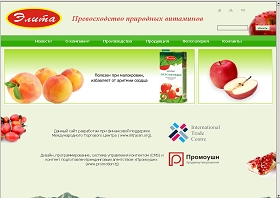
Few Tajik enterprises have a website, especially in the agro-processing sector: lack of resources is the most commonly named explanation, followed by low awareness of the benefits of a professional web presence. As ITC is promoting the development of e-business in the Tajik agro-business sector, it was decided to support the development of three websites for companies, to serve as role models and showcase best practice.
This activity was undertaken in partnership with the Chamber of Commerce and Industry of the Republic of Tajikistan (TPP). Three web-design agencies were contracted to implement this activity: ANKO Web Design, Caftar and Promotion. Tajikistan has a small base of companies in this area, but it has been growing in the last 12 months.
The three websites were developed at the beginning of 2009. The creative process required a close partnership between the beneficiary SMEs and the agencies, which needed feedback on design and architecture, as well as text and pictures on the content side. The sites were developed in Russian only, as the CIS is the main destination market for Tajik agro-processed goods. Search engine optimization was to be undertaken accordingly on rambler.ru, yandex.ru and google.ru, the leading engines in this region. To allow for easy updates, the sites were built on the basis of a CMS, a web content management system. As a result, updates do not require the involvement of IT experts.
Once finalized, the websites were submitted to ITC’s Online2Export group of international experts. They assessed the sites and voted for the best one through an online survey tool. Elita was designated as the best website, based on its usability, content and search engine optimization. Pulod Amirbekov, General Manager of Promotion, welcomed the designation and hoped that the competition result would get other Tajik companies to opt for a website – using local expertise.
The increased availability of ICTs in Africa provides opportuities for their adoption in the process of art creation and in the marketing of unique handcrafted products to large audiences. The increased opportunities for cultural exchange and for export of digital content raise questions regarding the licensing of art products and their copyright.
At the Africa Gathering which took place in London on April, 25th 2009, Martin Konzett from ICT4D.at (Austria) presented the trailer for the upcoming film release “Hello Africa”. The movie is a documentary which sets out to illustrate the ongoing phenomenon of constantly increasing mobile phone use in Africa in general, and Zanzibar in particular. The film documents how the mobile boom is changing traditional attitudes, cultural values and social patterns.
The documentary captures contemporary, everyday life in Africa. It presents the lifestyles of African people, the concepts used in their popular culture, their habits, opinions and activities in the context of mobile technology use. “Hello Africa” portraits individuals from various social groups: students, rappers, teachers, athletes, vendors, watchmen and many more. The forthcoming release date for the documentary is May, 8th 2009. The interest in “Hello Africa” even prior to its release is an example of the opportunities offered by ICTs for cultural exchange between Africa and the rest of the world. The film will be licensed under a Creative Commons license BY-SA. This means that all of the raw material as well as the final edit of the film will be available for anyone to copy, share, remix and sample under the license condition.
The increased opportunities for cultural exchange and for export of digital content prompted the International Trade Centre (ITC) to published in February 2009 the technical report “Trade in Sounds”. The report considers the potential of digital content, particularly music, to generate export revenues for developing countries and to encourage the online distribution of music from developing countries. The report uses the OECD definition of digital content as the “digital delivery of content, specifically, scientific publishing, music, on-line computer games, mobile content, user-created content and public sector information and content”.
“Trade in Sounds” presents ITC’s findings on the topic of international trade in digital music. The subject matter is introduced by a chapter on market trends and challenges. The report continues by overviewing methods and techniques which can be used successfully for the distribution of digital content via the electronic channel. Because of its commercial character and its impact on music trade, traditional copyright, rather than Creative Commons licensing, is enphasised in the report. “Trade in Sounds” includes detailed case studies of the existing opportunities for export of digital music content by the music industries in Brazil, India, Kyrgyzstan, Mali, Senegal, Serbia and Tajikistan.
Another recent initiative aimed at an increase in the exchange of visual art products between West Africa and the rest of the world is the project Kachile led by Ulf Richter in the Ivory Coast. Kachile seeks to create digital opportunities for artists in West Africa by enabling them to sell products in the following categories: accessoires, african art, ceramics, fashion, furniture, jewlery, music, textiles, toys, etc. The categories in the Kachile marketplace are still in the process of being populated. Nonetheless, the project carries the promise of creating an electronic marketplace for African products of visual art and music.
Here is a video I came across detailing the recent meeting of the CGIAR consortium for spatial information, under the heading “Mapping our future”, carried out on March 31- April 4 2009 in ILRI Nairobi, Kenya.
Video features interviews with Mr. Srikant Vasan from the Gates Foundation, Mr. Todd Slind from CH2M, Mr. Andrew Jarvis from Biodiversity, CIAT, and Mr. Stanley Wood from IFPRI. The main topic discussed is location intelligence and its use for raising incomes and reducing the poverty for smallholder farmers. Mentioned are novel means of delivering geo-spatial information to farmers and constituents in developing countries, including the mobile technology channel, web applications and low tech delivery methods. Interviewees emphasize the current drive to deliver location-based information to farmers, extension workers, agricultural input and output traders, micro-finance institutions. Mr. Stanley Wood mentions presentation by Google Kenya who have created tools to search and navigate through web-based information. He stresses the need for the parallel alignment of the efforts and resources of private technology developers such as Google and research institutions such as IFPRI.
Vodpod videos no longer available.
Mr.Andrew Jarvis summarises the current trend in geo-spatial technology to provide practical solutions to problems identified by social scientists and decision-makers. He mentions that the revolution in the use of mobile technology in Africa happened within 3-4 years, allowing the development of services such as Tradenet in West Africa and envsions a revolution in the use of geo-spatial technology. I personally am certain that location-based information delivered via mobile technology can greatly impact the efficiency of the food supply chain in African countries, thereby benefitting farmers, and facilitating the work of marketers and intermediaries.
See ICT KM Program and AGCommons for detailed information. AGCommons sets out for itself the following goals:
GOAL ONE: Discover how geospatial technology can improve farmer productivity and market access
Although 75 percent of the world’s poorest people live in rural areas in developing countries, only 4 percent of total government spending goes to supporting agriculture. Providing greater support for agriculture is a critical means of fighting poverty and hunger, as highlighted by the World Bank in its World Development Report 2008: Agriculture for Development. The World Bank concluded that investing in agriculture is four times more effective at reducing poverty than investments made elsewhere.
Agriculture can provide a pathway out of poverty, but only if productivity and access to markets increase. Agricultural success in sub-Saharan Africa depends on a farm’s location, in addition to land, soil, natural resources, and climactic conditions. Farmers need access to location-specific (geospatial) information to make better decisions about which crops to plant and when to harvest.
Location-specific (geospatial) information is not consistently produced in ways that are helpful and accessible to local farmers. These farmers, as the best sources of data about local conditions, also have no easy way to contribute to the information-gathering efforts. After soliciting feedback and input from smallholder farmers in sub-Saharan Africa and the agricultural aid communities, the AGCommons program will identify, develop, and implement helpful tools to help farmers gain timely information about their specific locations, enabling them to boost their productivity and improve access to markets.
GOAL TWO: Engage a community of interest to improve sharing and accessibility for location-specific information
During the first phase of the AGCommons program, we will engage a community of interest by reaching out to those in the agriculture development community—from farmers in the field to ministries of agriculture and aid organizations—to develop and prioritize innovative ideas to leverage geospatial technology. This will be accomplished through a series of community workshops in Africa, Rome, and the United States, followed by a methodical project prioritization process.
This community of interest will help the project team accomplish the following tasks:
· Identify critical gaps in existing geospatial technology
· Enable us to solicit and share potential high-impact solutions
· Select and deploy “quick win” projects in mid-2009 to build on existing work
· Confirm the use and value of geospatial technology services
· Establish ownership for these services
· Align existing geospatial technologies to better serve agriculture development
· Promote a set of best practices to help realize the highest potential value from geospatial investments
Engaging the people and organizations who will most benefit from this program will ensure a focus on providing the solutions most beneficial to the smallholder farmers.
GOAL THREE: Deliver high impact solutions that provide value to the “last 10 kilometers”
Although the AGCommons program will have wide-ranging benefits to economies of sub-Saharan countries and the agricultural community at large, the primary focus is on the end users, the smallholder farmers who rely on agriculture for their food and livelihoods. The driving force behind this program is to provide these farmers, many of them women, with easy-to-use, accessible, up-to-the-minute data that can help them make better decisions about how to farm their land, harvest their crops, and bring their harvest to market. The high-impact solutions could end up being databases, cell phone applications, or architecture or networks branching across reams of agricultural data; however, the farmers are the ones who give them meaning and utility. Engaging these farmers in identifying their greatest needs will ensure that we develop the most helpful solutions to improve their daily lives and incomes.
Pyr.mea.IT – Permeating IT towards the Base of the Pyramid is an exploratory research project which was started by the IBM India Research Laboratory (IRL) in New Dehli in August 2006. Its aim is to create technologies which would provide IT solutions relevant to the needs of people in developing regions of the world.
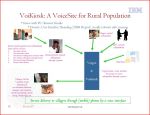
The project team including Sheetal K. Agarwal, Arun Kumar, Amit A. Nanavati and Nitendra Rajput have recently demonstrated the use of VoiGen and VoiKiosks. These systems allow the creation and browsing of VoiceSites forming a “spoken web”. The systems developed by Pyr.mea.IT consists of the deployment of software called VoiGen through which IRL is looking to enable rural users to input and create content in the spoken web. Complimentary to VoiGen and the content generation process is a service called VoiKiosk which would allow information users to access the available content. Voice kiosks are envisaged as telecentres enabling the use of the spoken web through the proximal literacy of kiosk operators.
In order to create a voice site, a uaer would need to dail a numeber and follow the instructions provided by VoiGen. The software asks users to record, in their local language, information such as a welcome greeting and contact details, while creating behind the scenes a VoiceSite. A phone number, analogous to a URL, is then assigned to the user’s content. Anyone who dials that number gets access to the recorded information and is given help navigating to related information. The way a caller navigates the VoiceSite is based on a templates developed by IRL, including voice site templates for advertisements and for auctions. Not unlike classified, the voice sites created through VoiGen are meant to enhance the trade opportunities of Indian small businesses offering and looking to buy anything from vegetables to jewellery, to electronics.
According to the New Scientist, 24 October 2008, “the spoken web is a network of VoiceSites, just as the internet is a network of websites. A VoiceSite can only be accessed by a phone, and only requires the user to be able to speak and listen. Callers can create their own VoiceSites or access those of others. They can also surf the spoken web, jumping from VoiceSite to VoiceSite using speech.” The spoken web is an attempt to bring the benefits of the internet to rural India where people tend to earn only $4 per day or less.
The Pyr.mea.IT project has been targeted towards the use of voice communication because studies of mobile phone use in India, carried out by IRL have shown the dominance of voice as a communication medium. Not unlike many other places in the developing world, the popularity of text messages and WAP communication channels in India is affected by users’ literacy and technological literacy levels.
Pyr.mea.IT is an exciting project because by making voice the primary mode of communication and information exchange, it takes a step towards adjusting the development of technological solutions to the information needs, and literacy requirements of end users. Still, many challenges remain. Voice services are traditionally challenged by users’ propensity to hang up because of time pressures, because of users’ dissatisfaction with the progress they have been able to make, or because users have reached a node where none of the available navigation choices seems appropriate. Additionally, the navigation process could be challenged by the suitability of the voice recognition technologies currently available to the specifics of Indian rural languages and dialects.
Under the title “Market Intelligence: How Mobiles are Helping Farmers and Fishermen” Telecom TV recently covered the work of the Kenya Agricultural Commodity Exchange (KACE) , as well as the use of mobile phones for price discovery by fishermen in Kerala, India. Trades of various other goods and services in India were also covered. Both, the work of KACE and the changes in the information behaviour of fishermen in Kerala are phenomona well familiar to people interested in the application of mobile technology to agricultural trade in developing countries. Still, the video material allows us the opportunity to visualise the daily routines and work conditions of Kenyan market traders and of Kerala fishermen.
Name: TV Ramachandran, Mutahi Kagwe, Godfrey Fwamba
Recorded: 13/03/2009 – Nairobi, Kenya and Kerala, India
The background behind KACE is that it is a commercial enterprise seeking to facilitate the process of price discovery occurring the market exchange of agricultural products. The video footage covers the work of Godrey Fwamba who appears to work as an enumerator and his duties seem to involve daily visits to the Nairobi market. During those visits he collects prices from the local traders, then sends them back to his office via SMS, where they are made available to farmers. The role of enumerators is crucial for the successful implementation of mobile market information services. A dedicated network of extension workers is capable of collecting comprehensive price and avalability information from local markets, thereby enabling ICT solutions to deliver relevant information with potential for changing the behaviour and choices of market suppliers.
The video further shows the work of Pradeep Kumar, skipper of the Sreevaltsom, a trawler fishing in the seas of Kerala, India. Pradeep Kumar is shown using his mobile to check fish prices, thereby ensuring he lands his catch at the most profitable quayside market. The story about the impact of increased mobile network coverage in the coastal waters of Kerala on the market prices for fish in the region is familiar from the work of Robert Jensen. In Issue 3, 2007 of the Quarterly Journal of Economics Robert Jensen published the results from a study carried out between 1997 and 2001 in theh Kerala region. The empirical worked showed that the increased availability of mobile phone communication, encouraged fishermen to make informed decisions about which port to land at and reduced the price dispersion among fish markets in different ports. It is worthwhile to point out that the behavioural changes and the welfare gains in Kerala were not the result of any subsidised mobile market information initiative. By contrast, the changes in Kerala were self-sustaining because they resulted from individual bhavioural adaptations to information availability.
In December 2008 Nokia launched in India a pilot range of information services, covering topics in Agriculture, English Language, General Knowledge and Astrology. The services are geared towards mobile phone users in emerging markets, particulatly in rural areas. Nokia has indicated that any successful initiatives in India will be expanded across selected countries in Asia and Africa.
Today Nokia announced the conclusion of the pilot phase of its pioneering Life Tools service in Maharashtra, India, and the results show that subscribers are reaping the benefits. Extensive feedback from actual subscribers revealed that the service had wide appeal, and connected with subscribers at both emotional and functional levels. The positive feedback from beta trial means full commercial launch of the infotainment services is on its way in the first half of 2009.
The service will be enabled out of the box in the Nokia 2320 and Nokia 2323 handsets, which will soon begin shipping. Support for more devices will be added later in the year.
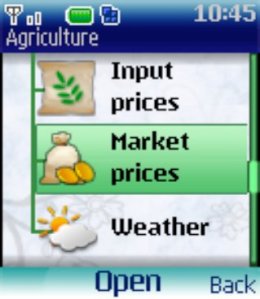
In terms of content, Nokia Life Tools is a range of agriculture information and education services designed for rural and small town communities in emerging markets. It uses an icon-based user interface that can display information simultaneously in two languages. SMS is used to deliver the content so GPRS coverage and fiddly settings are not required.
The Agriculture service of Life Tools provides an easy interface to Reuters Market Light, an information service which delivers information on weather, market prices and farming advice. Users of the Agriculture Service described that they were better informed about market rates for their produce. Farmers found that getting prices daily on their mobile phones reduced their dependency on agents for basic information. Now with greater awareness on market conditions, there was newfound confidence in their negotiations with the agents. There was also resounding appreciation for the time and money saved from not having to make multiple trips to the market place to get the latest rates.
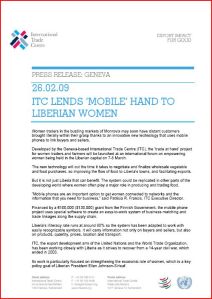
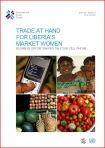
On 26 Feb 2009 the International Trade Centre (ITC) in Geneva announced the delivery of the project “Trade at Hand for Liberia’s Market Women,” funded by the Ministry of Foreign Affairs of Finland. The project is continuation of ITC’s Trade at Hand programme which has been operational since 2006 and focuses on the use of mobile technology for the delivery of agricultural market information.
“Trade at Hand for Liberia’s Market Women” delivers to its end users a service of the participatory type, requiring from end users the contribution of content. The service collects from agricultural producers in rural areas information regarding the availability, location and price sought for different agricultural products. This information is delivered via GPRS to consumers and traders in predominantly urban areas. The market information service deployed by ITC in Liberia is characterised by the Mr Raphael Dard, the manager of the project, as a Liberian national “mobile marketplace” and a seed of a sub-regional one. Trade at Hand facilitates the search process of both, producers and consumers. Using the service buyers and sellers of agricultural products are able to identify an interested party at the opposite side of the market. As a “business matching information service” the Trade at Hand service deployed in Liberia is an innovative within the Trade at Hand framework. Prior Trade at Hand efforts have included the delivery mechanism, rather than the content generation. These include the delivery of international market price information, and the delivery of market alerts to end users in Burkina Faso, Mali, Senegal, Mozambque.
The Trade at Hand poject in Liberia was realised in conjunction with ITC’s Liberia Export Development Project (LEDP). LEDP has developed a network of extension workers and enabled the delivery of comprehensive agricultural extension services within the country. Through its extension network LEDP has encouraged the production of export-oriented agricultural products such as spices (e.g. African bird-eye chilli pepper), coffee and cocoa. This network facilitated the initial deployment of the Trade at Hand mobile market information system in LIberia. During the deployment process extension workers took part in the process of training and subscribing 100 users of the system. These users included market women and rural farmers.
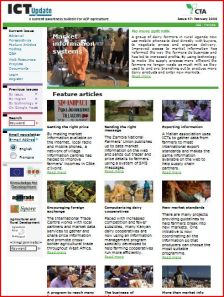
The newly published Feb 2009 issue of ICT Update (47) features is dedicated to the topic of Market Information Systems, recent implementations and trends in their use in developing countries. ICT Update reviews many ICT4D projects targeted at the use of ICTs for the improvement of market access for farmers in developing countries. Some of the initiative featured in the issue include:
National Association of Agricultural Producer Organizations of Côte d’Ivoire (ANOPACI)’s market information system called système d’information sur les marchés (SIM -ANOPACI). SIM -ANOPACI works through a network of village information centres (points d’information villageois, or PIVs) to gather, process and disseminate agricultural information. This includes prices, offers to buy or sell, availability of products and comments on market trends for particular products.
Zambia National Framers’ Union (ZNFU) uses an SMS announcement service in order to inform rural farmers about market prices for their crops.
Malian fruit and vegetable export organization, Fruit et Légumes du Mali (Fruiléma) use of GPS, cameras and computer technology in order to monitor mango harvests and their compliance to international quality standards.
Coopworks, information management system for Kenyan milk cooperative. The systems assists cooperatives in their tracking of daily, weekly and monthly deliveries of milk by any farmers. The system can compile reports based on collection routes, farm location and regions.
Kenya Agricultural Commodity Exchange (KACE)’s market information and linkage system (MILS). The system provides reliable and timely market information and to link farmers to the markets by finding matches for offers and bids on agricultural goods. The system uses market information points located in rural markets throughout Kenya.
The use of FrontlineSMS for the delivery of market information by FIAGRO (Agricultural Technology Innovation Foundation) in El Slavador, as well as by Mercy Corps in Aceh for their service MarketInfo-SMS.
I was also able to write myself about ITC’s Trade at Hand initiatives. My article Encouraging Foreign Exchange is focused particularly on the pilot of the mCollect system in Burkina Faso, Mali, Senegal, Benin and Ghana.
I shall be useing the newly available ICT Update information about market information system in developing countries in order to inprove the list of ICT4D market projects.
I have been taking a good look at the website of Grameenphone’s CellBazaar in Bangladesh. The CellBazaar initiative is certainly worth some consideration because it is one of the better established mobile marketplaces.
CellBazaar offers multiple channels for checking the listings and for submission. The mobile channels include SMS and WAP. Concurrently, all the sell offers submitted within the last 30 days are available for viewing online.
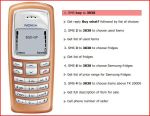
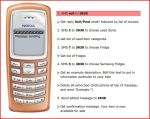
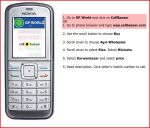
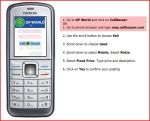
I have been particularly interested in the CellBazaar tutorials for the viewing of the available offers via mobile technology and for the submission of offers. The tutorials feature the procedures for announcing a sell lead and for checking the sell leads. The procedures (SMS Buy, SMS Sell) involve the sending of 4 text messages in order to sell, and of 5 messages in order to buy. In response, the user of the system receives lists of the available metacathegory, cathegory, sub-cathegory and price range options. The user makes a choice by texting to CellBazaar the number of the selected option.
The buying and selling procedures are less clumsy when the users have WAP trechnology at their disposal. The buying and the selling procedures are explained respectively at WAP Buy and WAP Sell.
Considering the SMS and WAP procedures one fact sticks out. In neither selling procedures (SMS or WAP) is the user required to specify his/her location. In the WAP Buy procedure once a buyer chooses the sub-cathegory of goods he/she is interested in, he/she needs to specify a location and a price range. In the SMS Buy procedure the is required to specify a price range. This all leaves the question open as to how CellBazaar is able to know the location of its users. Is anyone aware of what location technology they are using? If CellBazaar do indeed infer the location of their users without asking them to confirm it, that seems to me a rather poor practice. If it is otherwise, I would very much appreciate hearing about it.







 MMD4D
MMD4D 